
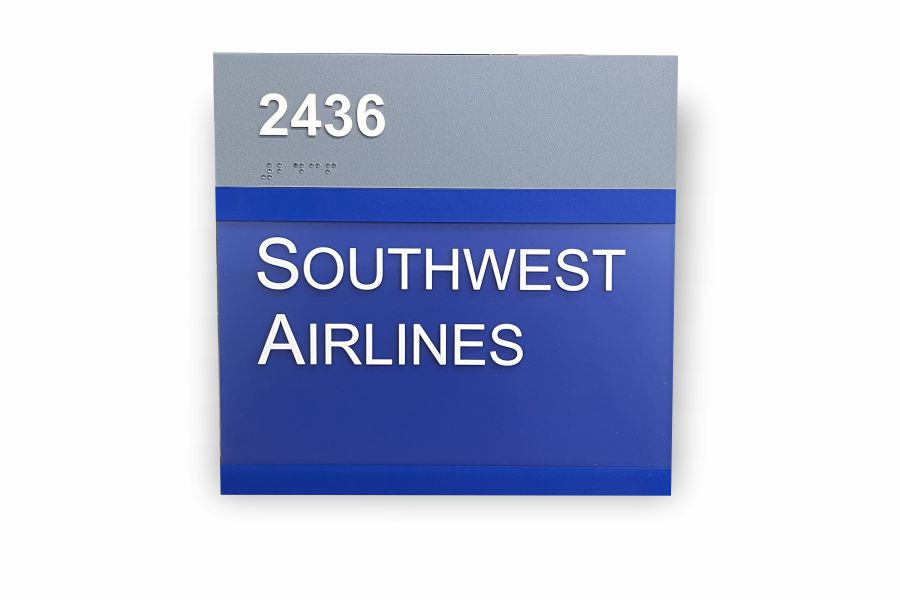
Creating Accessibility: The Art of Manufacturing Braille Signs

by | Mar 8, 2024 | ADA Braille Signage

When first walking into an unfamiliar office building or medical facility, what’s the first thing you often do? You’ll likely start scanning your surroundings for directions and signage to point you in the right direction. However, in a sea of visual information in new surroundings, how would someone who is visually impaired navigate this environment? This is where the art of manufacturing the perfect Braille sign becomes a necessity.

Braille signs are tactile pieces of communication that provide essential information with raised dots and contoured text for individuals with visual impairments. These signs are functional and can serve as a bridge to inclusivity and accessibility in public spaces. Understanding the components and techniques involved in creating Braille signs can shed light on the intricate process behind making these crucial tools for navigation and communication.

Understanding Braille Signs

Understanding Braille signs goes beyond just tactile dots. They truly bridge the gap between accessibility and inclusion. Crafted with laser precision using sophisticated drilling and tooling machines, Braille signs are essential for visually impaired individuals to navigate spaces independently. Key components of a Braille sign include raised lettering or symbols in colors that contrast their background, alongside the corresponding Braille characters in Grade 2 format.

Creating a Braille sign requires meticulous attention to detail, as well as accuracy in sizing, spacing, and placement of the tactile and other features. Sign manufacturers employ specialized equipment like CNC machines, laser cutters, and UV printers to ensure durability and readability. By integrating Braille signs in public spaces, businesses not only comply with accessibility regulations, but can also help to foster a more inclusive environment for all visitors, patrons, and guests.

History and Importance of Braille

Braille signs play a crucial role in creating accessibility for the visually impaired community. Developed by Louis Braille in the early 19th century, this tactile writing system has significantly enhanced the independence and equality of individuals with visual impairments. By providing vital information through touch, Braille signs enable individuals to navigate public spaces, educational institutions, and workplaces with confidence and greater ease.

Crafting a Braille sign involves several essential components. Firstly, the sign must contain raised dots arranged in specific patterns that represent letters and numbers within the Braille alphabet. Additionally, the text accompanying the Braille should be printed in contrasting colors to ensure visibility for sighted individuals, as well as being raised to aid with hands-on tactile readers. This combination of raised textured and contrasting visual information helps ensure more effective communication.

To have a successful Braille sign made accurately, it’s imperative to work with experienced manufacturers who understand the intricacies involved in producing these specialized signage items. From selecting appropriate materials to precision cutting techniques for creating Braille dots, attention to detail is key when creating these essential tools for accessibility. Also paying attention to things like rounded corners instead of squared and making sure all edges of the signs are smooth are important factors when choosing a manufacturer. Working closely with professionals who prioritize quality and understanding of accessibility guidelines will help your Braille signs serve their intended purpose most effectively.

Components of a Braille Sign

When considering the components of a Braille sign, it’s essential to understand that these tactile signs play a crucial role in making spaces accessible for individuals with visual impairments. A Braille sign typically consists of raised dots arranged in specific patterns representing letters, numbers, and punctuation marks from the Braille alphabet. These signs also often include visual printed text along with the Braille translation to cater to those who are both sighted and visually impaired.

In sign manufacturing, precision is key when creating Braille signs to ensure compliance with accessibility standards. The components of a Braille sign involve meticulous attention to detail in terms of dot height, spacing between characters, and proper mounting techniques. By incorporating various materials like durable plastics or metals and utilizing advanced technologies such as CNC routing and UV printing, manufacturers can produce high-quality Braille signs that seamlessly blend functionality and aesthetic appeal within different environments.

Designing an Effective Braille Sign

Designing an effective Braille sign requires meticulous attention to detail and a deep understanding of accessibility principles. These signs are not just about providing information, but are also about creating inclusivity and ensuring equal access for all individuals. A well-crafted Braille sign should be clear, concise, and positioned at the correct mounting height for easy reading and safe tactile exploration.

To create a functional Braille sign, several key components must be considered. The text should be appear in Grade 2 Braille, which uses contractions to represent common letter combinations for efficient reading. Additionally, the Braille dots should be evenly spaced and raised the appropriate height for easy touch recognition. Choosing high-contrast colors between the background and text is also essential to ensure readability for visually impaired individuals.

Incorporating Braille signage into public spaces is not just a matter of compliance. It’s a statement of commitment to accessibility and inclusivity. When designing or installing a Braille sign, it’s important to consult with local authorities in compliance, such as the Fire Marshal, to ensure adherence to government regulations and best practices as issued by the state, county, or city. By really investing into the art of crafting and properly installing Braille signs into our facilities, we can make our environments more welcoming and navigable for everyone, fostering a society that values diversity and equal opportunity.

Installation and Placement Guidelines

Installing a Braille sign is not just about meeting regulations, but is also about creating inclusive spaces for all. Understanding the components of a Braille sign is essential – raised lettering, Grade 2 Braille translation, and high contrast colors are key elements that ensure readability. Sign manufacturers play a crucial role in producing these signs with precision and quality.

Crafting a Braille sign involves attention to detail and adherence to specific guidelines to ensure accessibility. Factors such as height placement, readability distance, and orientation are critical in creating effective Braille signs. By following proper installation and placement guidelines, businesses can enhance the overall accessibility of their premises for everyone, regardless of their visual abilities.

Ensuring Compliance with Accessibility Standards

When it comes to creating Braille signs, precision and attention to detail are paramount. These tactile signs are crucial for ensuring inclusivity and accessibility for visually impaired individuals in public spaces. A Braille sign typically consists of raised dots representing letters, numbers, or symbols that can be read through touch. The components of a Braille sign include the substrate material, Braille beads, and high-contrast visual information for visitors with low vision.

Manufacturing a quality Braille sign requires expertise in both design and execution. Each dot must be accurately placed to meet specific guidelines for readability and uniformity. Furthermore, the use of durable materials is essential to ensure the longevity and reliability of these vital accessibility features. Whether for indoor wayfinding or exterior room identification, investing in well-crafted Braille signs is not just about compliance, but also about fostering an inclusive environment where everyone feels welcome and accommodated.

Importance of Accessible Communication through Braille

In conclusion, the importance of accessible communication through Braille cannot be overstated. Braille signs play a crucial role in ensuring equal access for individuals with visual impairments, allowing them to navigate public spaces independently and with dignity. Understanding what Braille signs are and how they are manufactured is essential for promoting inclusivity and diversity in our society. By incorporating Braille signage into our environments, we can create a more inclusive world where everyone has the opportunity to participate fully. Let us continue to advocate for accessible communication through Braille signs and work towards a more inclusive and accommodating society for all.

Dimensional Letters Guide: Materials, Mounting and Upgrades

Dimensional letters made easy: materials, mounting, and when to upgrade to channel letters Dimensional letters are a dependable way to deliver crisp branding on façades and interior walls without overcomplicating installs. For partner sign shops gearing up for...

Wholesale Laser-Cutting Pricing Estimator for Sign Shops

This guide gives sign shops a practical, repeatable way to price wholesale laser-cut jobs without guesswork. It explains the key cost drivers, from material yield and machine-hour rates to setup, nesting, and finishing, then shows when UV print-and-cut or CNC routing is more economical. Use the included worksheet and examples to build quotes you can defend and protect margins on overflow work.

From Zund to Laser to Paint: The Journey of an All In-House Lobby Sign

A successful lobby sign isn’t just about looking good. It’s about engineering and executing a vision using the right tools. When the customer approached us needing a brand new lobby sign for Centex Auto Title, they had a vision that required precision, multi-process...

Wholesale Printed Signage: Expanding Your Service Offerings with UV Printing

As a sign shop, staying competitive means offering your clients innovative, high-quality products that set their businesses apart. That’s where UV printed signage comes in. With vibrant colors, durable materials, and nearly limitless design possibilities, UV printed...

A Guide to Custom Illuminated Cabinets: What Every Sign Shop Needs to Know

In the world of signage, custom illuminated cabinets are a standout solution for businesses looking to make an impression—day or night. For sign shops serving end users in Texas, offering illuminated signs can elevate your product offerings and grow your reputation...

5 Ways Partnering with a Wholesale ADA Sign Shop Can Boost Your Business

As a sign shop in Texas, you know the challenges of meeting your clients’ needs while navigating complex signage regulations. For many businesses, ADA (Americans with Disabilities Act) signage is one of the most critical and specialized requirements. If you’re looking...

Collaborating on ADA Compliance: Making Accessible Signs Effortless for Your Shop

ADA compliance in signage is a crucial but challenging area for many sign shops. With specific regulations on elements like Braille, color contrast, and mounting height, ensuring accessibility can become a complex task. For shops that don’t specialize in ADA-compliant...

Custom Wholesale Sign Fabrication on Demand: How Our Capabilities Enhance Your Offerings

At Texas Sign and Graphics, we know that other sign shops are constantly looking for ways to exceed client expectations by offering complex, customized products. But not every shop has the equipment or time to handle all aspects of custom fabrication in-house. That’s...

Overflow Solutions for Sign Shops: How We Help You Meet Tight Deadlines

In the signage industry, we understand that meeting deadlines is critical. Typically signage is one of the last finishes on a project which usually means it's often a rush to get it done in time as to not hold up final walk throughs and issuance of the certificate of...

Building Signage Solutions for Every Budget: Helping Your Clients Maximize Their Investment

When working with clients who are building their brand, signage plays a critical role in making that first impression. Whether you’re working with a small business or a large corporation, budget considerations often shape the decision-making process. As a sign...

A Comprehensive Guide to School Signage

When it comes to providing signage solutions for your school and university clients, there’s a vast array of options that serve both functional and aesthetic purposes. As a wholesale sign company, our goal is to equip your sign shop with the knowledge and products...

How to Properly Install ADA Braille Room Signage

Ensure accessibility and compliance with these essential tips for properly installing ADA Braille room signage. Installing ADA Braille room signage correctly is crucial for ensuring accessibility and compliance with the Americans with Disabilities Act (ADA). Proper...

Exploring the Different Types of Vinyl for Signage

In the world of signage, vinyl is a versatile and essential material that can be used for a wide range of applications. Whether your clients need something temporary or permanent, indoor or outdoor, decorative or functional, there's a type of vinyl that fits the bill....

Photopolymer vs. Acrylic ADA Braille Signs in Schools

When it comes to ADA Braille signage for schools, choosing the right material can make a significant difference in terms of cost, production time, and overall aesthetic. Two of the most popular materials used in the industry are photopolymer and acrylic. While both...

Understanding and Managing Material Defects in Large Format Signs

As a leading wholesale signage company in Texas, we pride ourselves on delivering high-quality products to sign shops and graphics businesses across the state. However, it’s important to set realistic expectations regarding material defects in large format signs....

Channel Letters: Trimless vs. Trim Cap – Making the Right Choice for Your Clients

When it comes to choosing the right channel letters for your signage needs, understanding the differences between trimless and trim cap options is essential. Both styles offer unique benefits and can dramatically impact the aesthetic appeal and functionality of a...

Signage Maintenance: Keeping Your Signs Looking New

As a wholesale signage company, we understand that maintaining the pristine condition of signs is crucial for your business and your clients. Whether it’s an ADA Braille sign, a UV printed lobby graphic, or illuminated channel letters, proper maintenance can...

Elevate Your ADA Signage: Create Modern and Unique Designs that Stand Out

As a sign shop in Texas, we know you understand the importance of ADA signage for accessibility and compliance. However, ADA signs don't have to just be functional; they can also be visually appealing and unique. Here at Texas Sign & Graphics, your wholesale...

Innovative Signage Ideas for Weddings

As the wedding industry continues to thrive, the demand for unique and personalized wedding decor has never been higher. Signage and graphics play a crucial role in adding that special touch to wedding celebrations, from guiding guests to their seats to enhancing the...

New Regulations for School Door Numbering Signage in Texas: What You Need to Know

As part of ongoing efforts to enhance safety and accessibility in educational institutions, Texas schools must now adhere to new signage requirements for all exterior building doors. This regulation, mandated by the Texas Education Agency (TEA) and supported by state...

The Anatomy of an ADA Sign: Ensuring Accessibility and Inclusivity

When it comes to creating accessible public spaces, ADA signs play a crucial role. These signs are designed with specific features that ensure they can be easily read and understood by everyone, including those with visual impairments. Let’s dive into the anatomy of...

Navigating Bidding: Tips for Winning Signage Contracts

Winning government, public, and private signage contracts can be a game-changer for sign shops, providing steady work and lucrative opportunities for growth. However, navigating the bidding process can be complex and competitive. When we first started bidding these...

The Power of Signage: 5 Brand Benefits of Custom Printed Signs

In the sign manufacturing industry, where creativity and functionality meet, the importance of custom printed signs cannot be overstated. These vibrant, eye-catching displays serve as powerful marketing tools, a guide for customers and visitors, enhance brand...

Sign Success: Avoiding Common Signage Mistakes

In the vibrant world of signage, where every corner tells a story and every storefront beckons with its unique appeal, the importance of effective signage cannot be ignored. As a wholesale sign shop nestled in the heart of Central Texas, we've seen the highs and lows...

Elevating Your Trade Show Booth: The Signage Essentials

As sign shops, we understand the crutial role signage plays in capturing attention, communicating messages, and driving engagement. Nowhere is this more crucial than in the dynamic environment of a trade show. Picture it: a jam packed conference hall filled with eager...

Lighting Up Your Business: 7 Advantages of Illuminated Signs

In the world of business, standing out is essential. Whether you're a small local shop or a bustling corporate entity, capturing attention in a sea of competition is paramount to success. One of the most effective ways to make your business shine – quite literally –...

Choosing the Perfect Sign Material: A Comprehensive Guide for Sign Shops

In the world of signage, selecting the right material for a customer's printed sign is paramount. Each material brings its own set of characteristics, benefits, and considerations, making the decision process a crucial step in delivering a high-quality product that...

Understanding Trimless Channel Letters

Imagine walking down a city street at night, surrounded by the vibrant glow of illuminated signs coming from above the sidewalks. Among them, you notice a sleek and modern building name sign that seems to float effortlessly against the building façade. These...

Wholesale Sign Industry Trends and Insights in 2024

The Wholesale Sign Industry in Texas As the Lone Star State continues to shine bright in the corporate world, we Texans stand at the forefront of innovative signage trends that are shaping the landscape of 2024. From the intricate elegance of Braille signs to the...